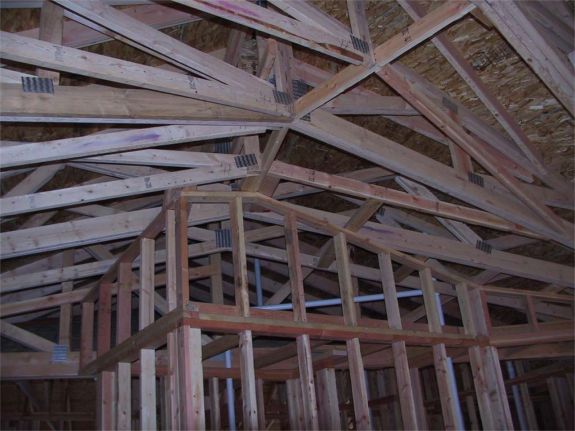
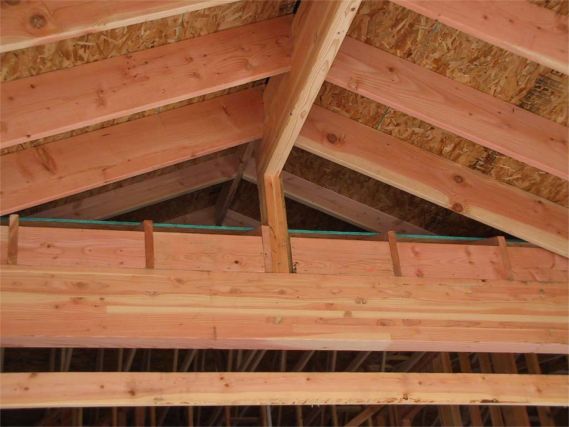
| Once the gross house structure was erected, the framers (who are craftsmen in their own right) went to work putting up pony walls (short walls between the top of the eight-foot studs and the ceiling height, which is variable up to about 11 or 12 feet). This required cutting lots of compound angles in little short pieces of wood. I have been very impressed with the fit and finish of these never-to-be-seen little details.
|
 |
| Here is some of the detail of the truss joinery at the roof peak where the roof bends 30 degrees around.
|
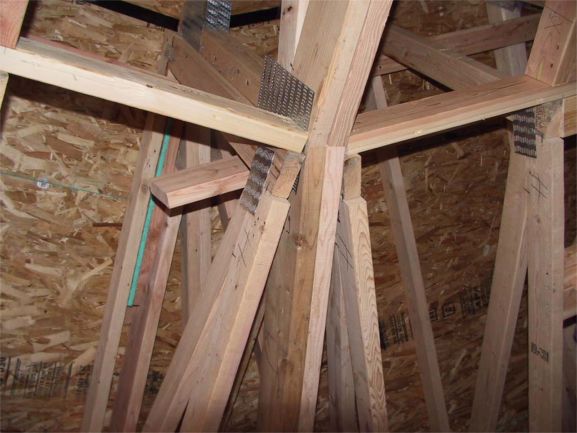 |
| Here's how the trusses join together at the apex of that angle.
|
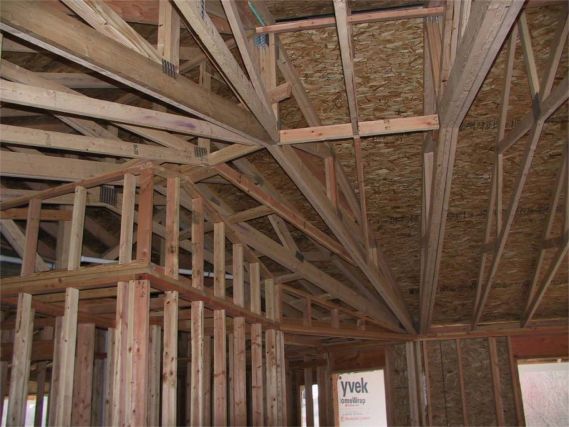 |
| Here is the overframing where the living room roof joins the second-story roof.
|
 |
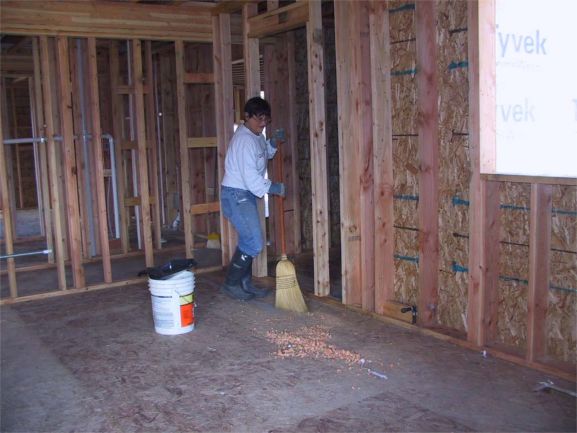
| Here is the carpenter's helper at the end of the week.
|
|
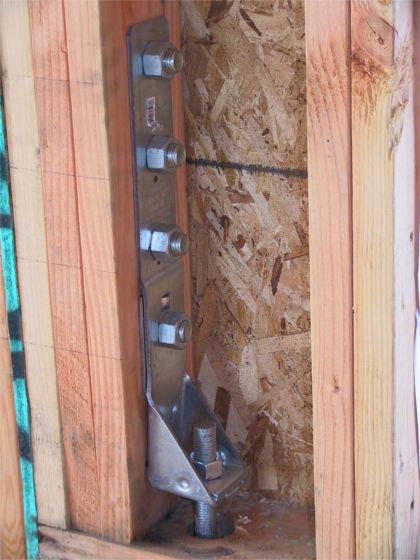
| At DCPP we could have called these snubbers. Here they are hold-down bracing against winds. After the engineering to withstand windload, earthquakes are not even an issue. |
|
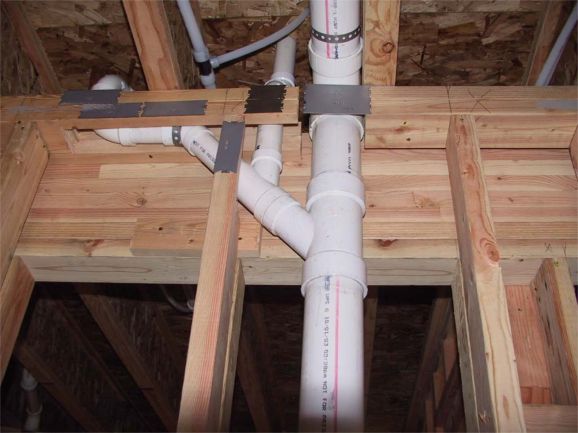
| There was a small problem with a plumbing wall - it seems there was a glu-lam in the way. So the framers "stole" four inches out of a room and built a false wall that serves only to hide the plumbing. Guess what went in first - the plumbing or the false wall. |
|
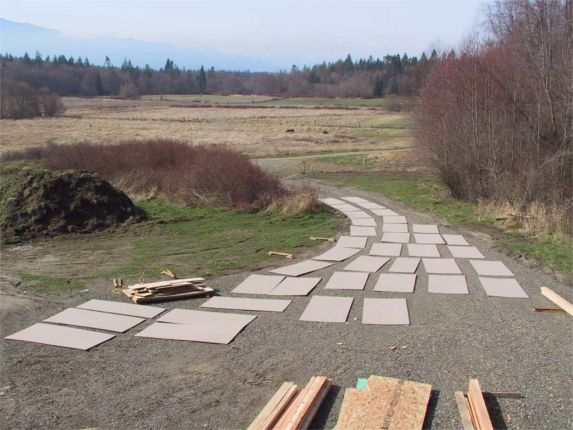
| Eaves are a big deal here (because of radical changes in sun angle, wind and rain). This house has three-foot wide eaves. We painted the soffit material before the carpenters install it - setting it out to dry on a sunny Saturday like so much laundry. |
|
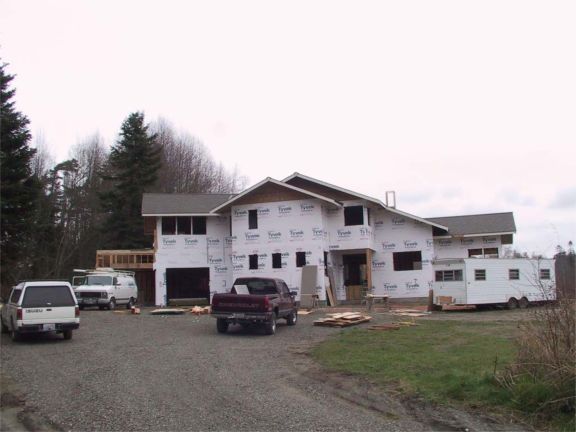
| Here's a picture of the west side (the front) of the house, just as they are beginning to put up the soffit boards. |
|
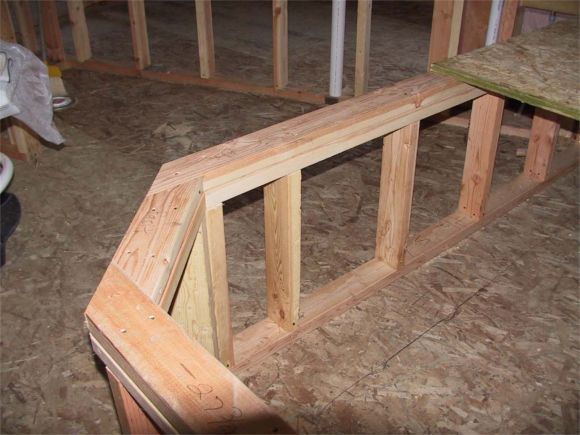
| The framer designed the tub surround so that it follows the shape of the whirlpool tub itself. |
|
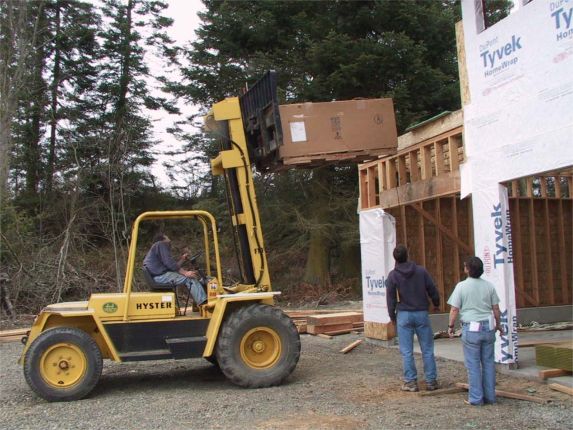
| The framer makes appropriate use of mechanical advantage to bring the whirlpool tub to the second floor. That's the general contractor, standing on the left, and the sidewalk superintendent, on the right, "helping". |
|