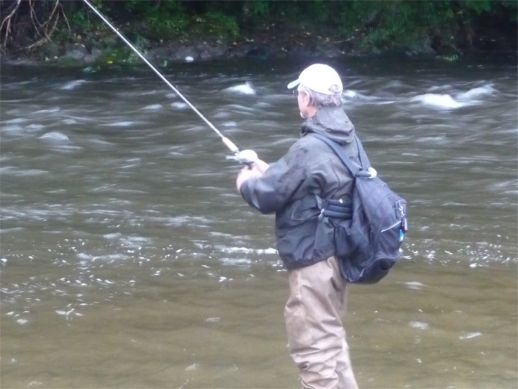
Our life has a same-ness to it, so that one year's report is very much like another's. "Activities of daily living" are housekeeping, firewood storage, food growing and preservation, all with a land stewardship component. A couple of times a year we travel here or there. We still volunteer, but not so much, since managing the land takes more of our time.
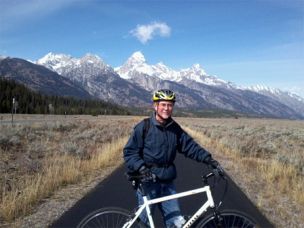
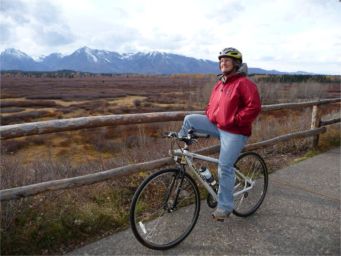
In December 2009, we dedicated a conservation easement with North Olympic Land Trust over our properties, preserving open space, forest and wildlife corridor in perpetuity. Then just this month, December 2011, we amended the conservation easement, protecting additional property under the same conservation guidelines. In terms of time, energy and diesel fuel, this "land stewardship" component of our activity consumes a fair portion of our energy.
Here are some trails, now drowned in fallen maple leaves, that we tended this spring and summer:
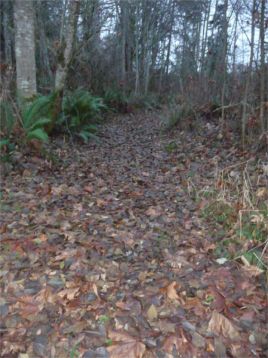
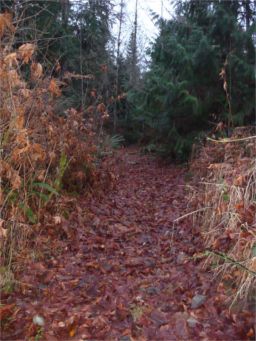
We were fortunate to have donated to us some 1,300 trees this last spring. This year the trees were bare-root seedlings, about evenly divided among four species: Douglas fir, western red cedar, western hemlock and Sitka spruce. Most of these we planted in March and April, clearing out brush and in-fill planting areas that were logged 20 or 30 years ago. A hundred or so, mostly red cedar, we healed in to a mound of top soil, saving them to be planted this fall.
We are astonished at the growth of the trees that we planted last year, and delighted that we had so little mortality. Here's a comparison, last year and this year. I'm not sure this is the same tree, but it is the same planting. Look carefully at the tree next to me in the picture, it is now as tall as I.
December 2010 -->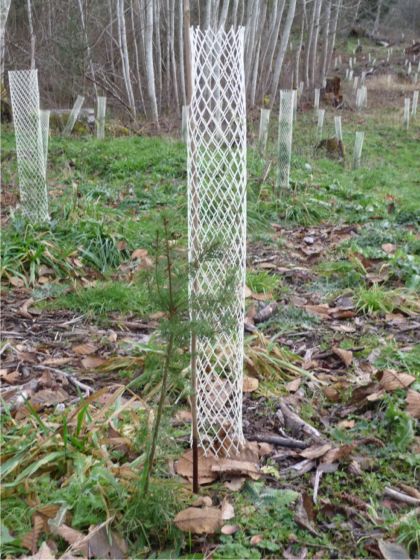
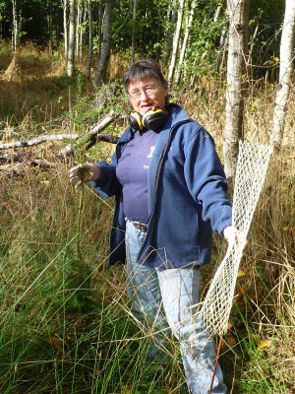 <-- October 2011
This year we were able to purchase a 1/3-acre piece that we then incorporated into our conservation plan (but only after the former owner logged off all the beautiful trees). We had a contractor mulch the slash that the logging operation left behind. He used a small excavator and a tub grinder. John and I spread the mulch over the terrain.
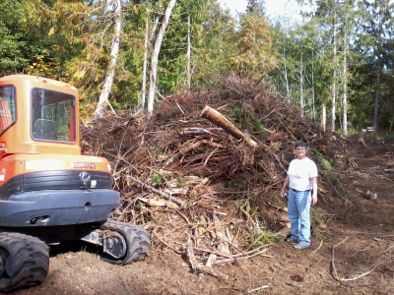
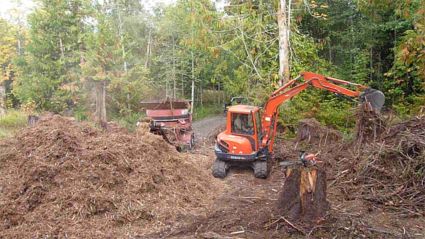
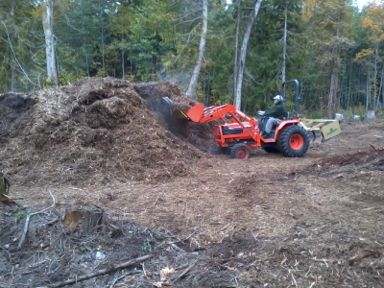
As the rains started in the fall, we planted the seedlings that we had saved.
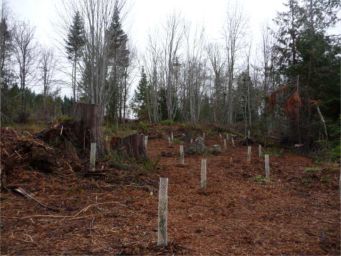
The trees that the former owner removed weren't "first growth". There are even older, bigger stumps decaying in the same area. When we counted the rings, these most recently cut cedars were just about 100 years old, probably having grown from seed after the (now removed) railroad was constructed in 1914-1915. That was probably the time that the first growth trees, whose decaying stumps we also see, were removed.
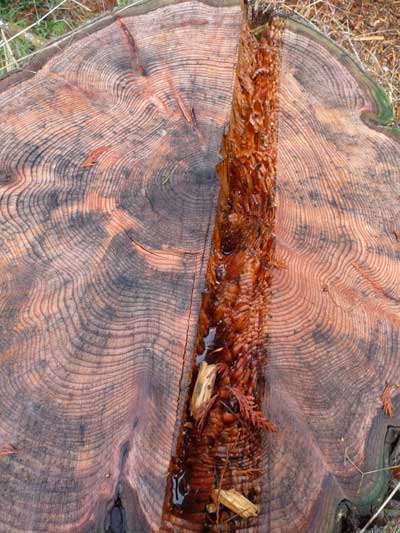
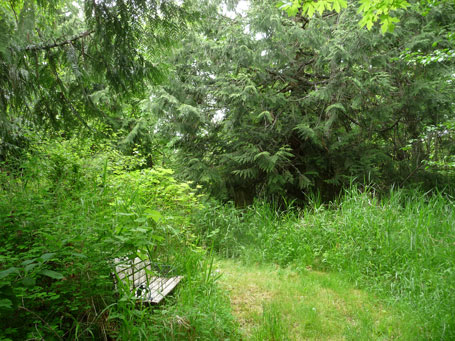
Maybe in another 100 years, this stand that we just planted will look much like the area did before last year's logging. More like this:
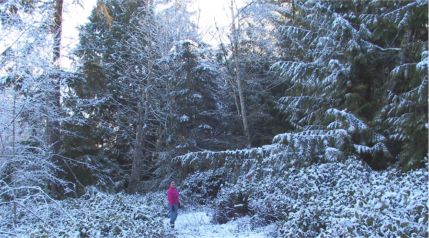
Seing things from the tree's perspective of time changes one's outlook. Who really knows what the world will be like a hundred years from now? If we are to use changes between "now" and our records of 1914 as an indication, we have to assume that these new trees, when mature, will see a world we cannot imagine. So, we are more inclined to enjoy the tasks we do now for their own sake, not in anticipation of an outcome. We can only appreciate the present; we can't change the past, and can only guess at the future.
Here, then, are some of the "present" things we live by:
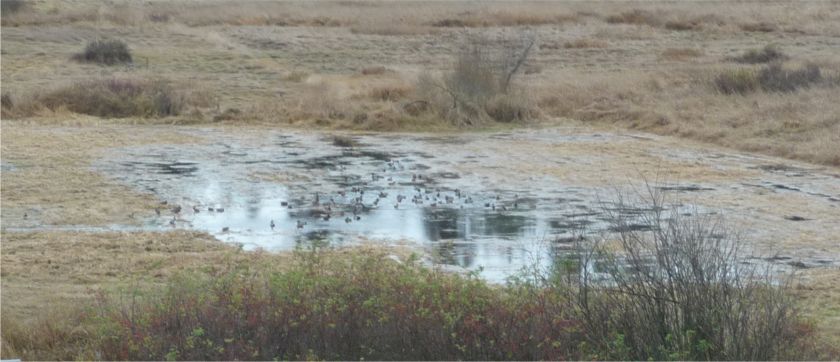
The wetland with wildfowl:
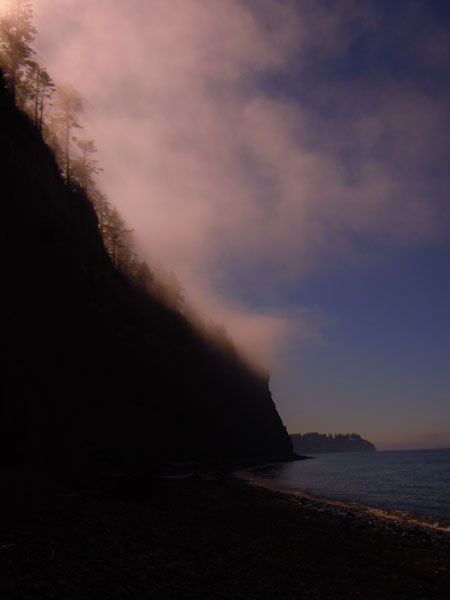
The bluff and the ocean:
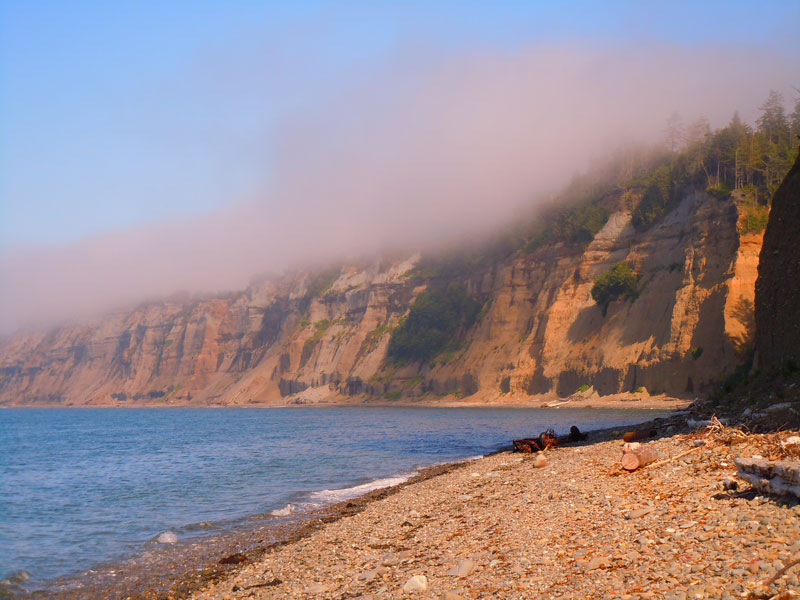
Trails and grottos:
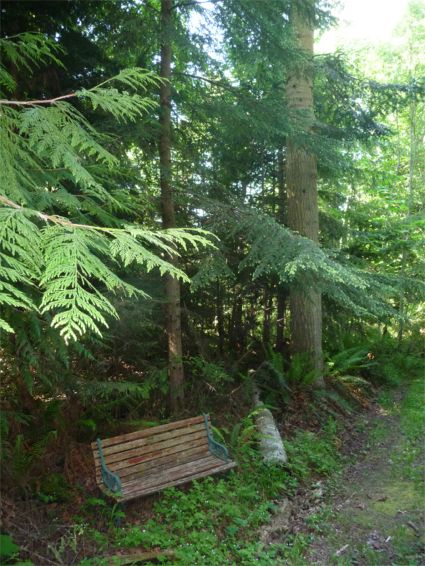
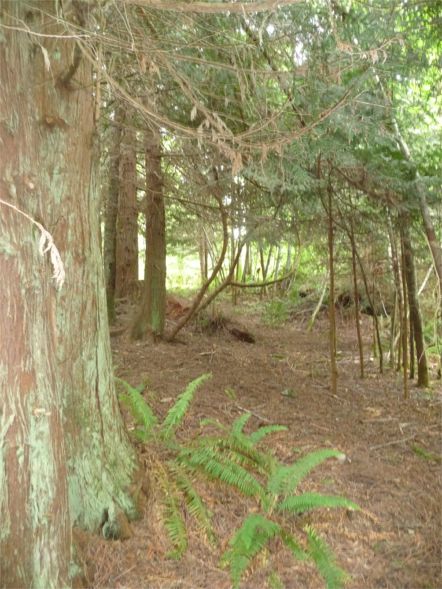
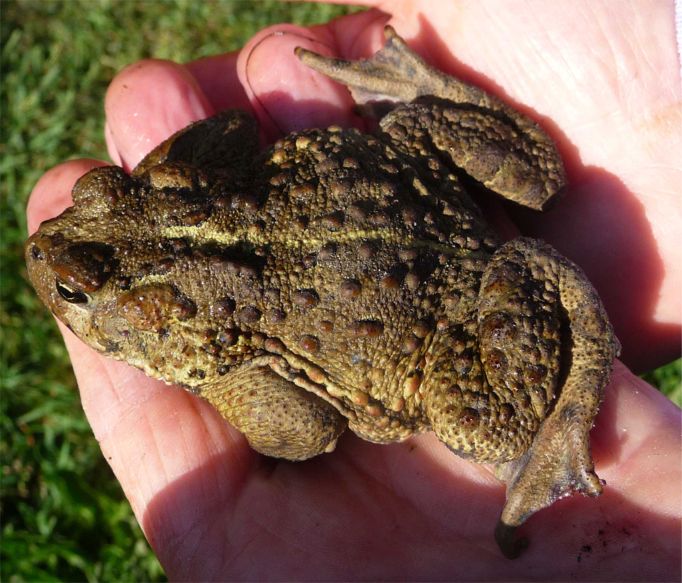
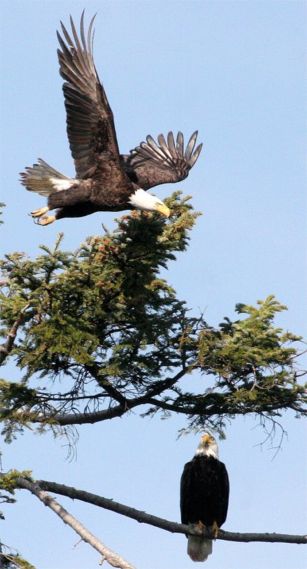
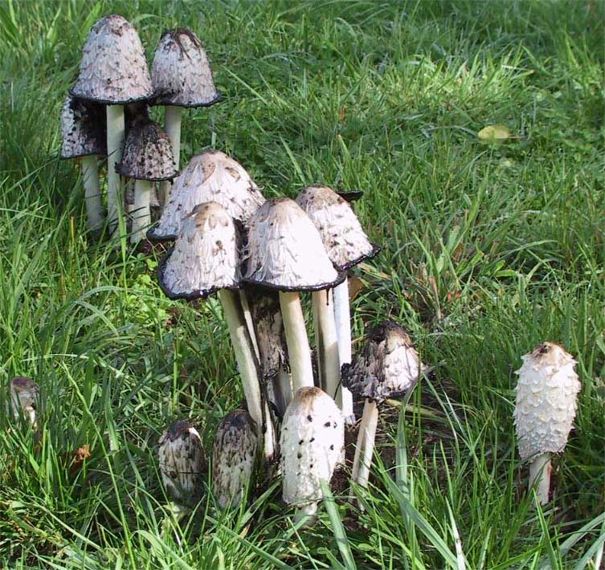
Living things:
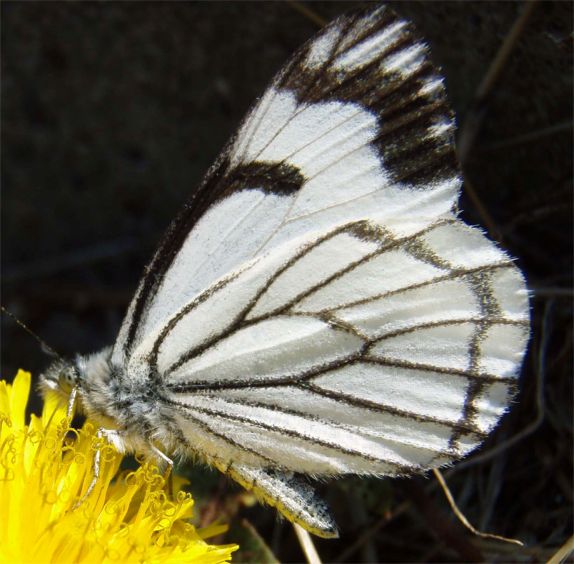
Rivers near our home: